
Martin Bryan is a Lead Community Health Worker at East End Community Health Centre (EECHC) in Toronto. For this month’s facilitator spotlight, we asked Martin to share his perspective as a recently-trained facilitator and community worker on the importance of low-barrier social prescriptions like the WCC program.
Can you tell us a little bit about yourself, and your role at EECHC?
MARTIN: I am a Lead Community Health Worker, offering case management services to clinical clients and community. We serve a wide variety of clients here at EECHC, particularly low-income and minority populations. Our Writing Group mostly supports low-income seniors with diverse backgrounds (race, gender, etc.) express themselves, while offering a great way to connect and feel less socially isolated.
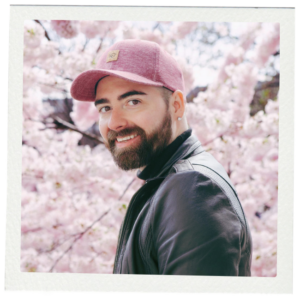
Describe your journey as a WCC facilitator – how did you find WCC, and when did you become a facilitator?
MARTIN: I am fairly new to facilitating WCC workshops, starting my first WCC workshop here at the EECHC in early September 2025. I found WCC while researching for writing resources as I was planning on creating a writing group for seniors where they can share their life stories and journeys to their loved ones. After speaking with Siobhan, WCC’s Director of Volunteers and Programs, I quickly realized that running such a group at the EECHC would greatly benefit our clients, and so began my journey facilitating WCC workshops there. It’s been wonderful so far, for not only the clients we serve at EECHC, but also as a learning experience for myself.
What do you experience in an on-site WCC workshop, when you write in community?
MARTIN: Offering an in-person, on-site workshop is an incredible experience. Getting to look folks in the eye while they’re sharing some of their most vulnerable moments through writing is a wonderful way of connecting. I feel humbled after every group and I’m honoured to be able to share this experience with our clients. We laugh, we cry, we accept, and we listen. Writing is very meditative in our group, as they always begin with a breathing exercise.
Tell us about one of WCC’s Six Essential Practices and how you see it come to life in your workshops.
MARTIN: “WCC stresses the importance of deep listening, listening is as important as writing in our workshops” is a standout Essential Practice. I see this come to life all of the time in our workshops, because people truly stop and listen, they ask questions, and sometimes the questions lead to interesting, novel, and sometimes philosophical discussions in how what was read impacted the listeners. It’s wonderful to see a natural energy of listening and responding in beautiful ways, whether the piece struck a cord with folks or not.
What impact have you witnessed through facilitating a space where participants, especially older adult writers, can discover and express their authentic selves? What is the significance of facilitating writing workshops in a free, accessible space such as the East End CHC?
MARTIN: The biggest impact that I’ve witnessed when working with older adult writers in discovering and expressing their authentic selves is watching their confidence grow from their very first visit to the last session. It’s remarkable how seemingly meek voices become lions in the room, where they learn to own their voice and become courageous in sharing themselves with the world. Having this group in a free and accessible space at East End CHC is incredibly important, because it offers invaluable free programming to folks who very much need it the most.
We offer a means of free self-expression. It gives chance to connect diverse folks with each other in a shared goal with the realization that we have more similarities with each other than differences. It brings people of various socioeconomic backgrounds together to share in perspective taking — whether it is someone who experienced homelessness or someone who’s child moved a great distance, they might share in a similar emotional experience of loss and grief. This group really brings folks together!
March 26 marks Social Prescribing Day. As an innovative arts-health program, WCC workshops are an effective and powerful social prescription for combating the epidemic of loneliness and isolation. Why are community partnerships like ours important?
MARTIN: Our clinical team has seen first-hand how social prescribing is a tried-and-true holisitic approach to mental and physical wellbeing. Having this partnership, where clients and community members can come to a Centre that they feel safe in, is incredibly important. The fact that we don’t have to refer them to another organization, and they have the opportunity to see their doctor before or after the Writing Groups, offers a streamlined level of care that is very unique to our neighbourhood.
Writing is a proven and effective strategy for clients to build and strengthen their mental synapses, which can decrease negative outcomes such as dementia and depression while improving their physical and mental wellbeing. Our clients are utilizing two of the most important organs in their bodies when writing: their brains and their hearts.
Why do YOU write? Tell us about your relationship to writing!
MARTIN: I write for the same reasons as our clients are joining our group each week: a means to connect with community, a chance to share and reflect on our experiences, and a way to keep ourselves creative. I’ve always been a creative person, and I am a freelance photographer outside of my role as a Community Health Worker. Writing offers me yet another means of expressing myself creatively. I often use metaphors in my writing, conceptualizing my experiences and perceived reality into writing that hopefully elicits a sense of day dream to those who happen to read or listen. Since my Undergraduate studies, I lost my love of writing to the scientific perils of Academia. But through this group, I’ve learned to write more freely. I’ve found my own voice through supporting others in finding their own.
Thank you, Martin, for your steadfast and compassionate work as a WCC facilitator and Community Health Worker.