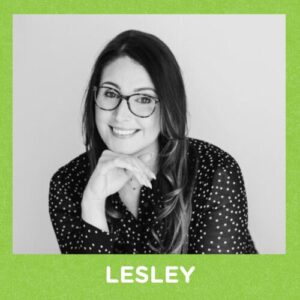
In honour of the back-to-school season, we’re proud to introduce Dr. Lesley Zannella, Assistant Professor in the Department of Psychology at York University for our partner spotlight. We asked Lesley to tell us about her work surrounding WCC at York, and the unique, collaborative relationship between our organizations.
Please introduce yourself! Tell us a little bit about you, your position at York, and the Critical Thinking in Psychology course.
LESLEY: My name is Dr. Lesley Zannella and I am an Assistant Professor in the Department of Psychology at York University. My teaching prioritizes experiential learning and inclusive practices that empower students to see the real-world relevance of psychology. Guided by my core pillars, bridging research and teaching, fostering mentorship and collaboration, and cultivating continuous growth, I design courses that move beyond traditional essays and exams, inviting students to engage critically and meaningfully with the world around them.
The Critical Thinking in Psychology course is a year-long capstone course for our Honours students. In the fall, they build foundational skills in advanced critical thinking, research literacy, and communication. In the winter, they apply those skills through a community-based project, partnering with local, non-profit organizations to address real- world issues. These collaborations give students the opportunity to graduate not only as strong thinkers and communicators but also as engaged citizens ready to contribute beyond the university.
Can you describe how you discovered Writers Collective of Canada (WCC)? What brought you to consider us as a community partner for the Department of Psychology?
LESLEY: I first learned about WCC through Dr. Kelly McShane, who was a Professor in the Department of Psychology at Toronto Metropolitan University when I was a graduate student. In her Program Evaluation course, I was inspired by the innovative ways she used community-based learning to connect students with real-world impact. That experience shaped my own teaching philosophy, and now, as an Assistant Professor at York, I’ve carried forward the practice of embedding community-based learning into my courses.
Kelly not only encouraged me as I adopted this approach but also introduced me to WCC, opening the door to a partnership that has profoundly enriched my students’ learning. WCC’s mission, amplifying underheard voices through writing, resonates deeply with the values of psychology and aligns with my commitment to inclusive, experiential education. This partnership has given students the opportunity to see how their academic skills can contribute to community well-being, creativity, and social change.
 What has been surprising, or what stands out to you, about partnering with WCC? What is the value of this partnership?
LESLEY: What stands out to me most about partnering with WCC is how it highlights the connections between different domains of writing in students’ lives. Many students in this course practice academic writing and engage in personal writing for reflection or therapeutic purposes, yet they often view these as separate and unrelated practices. WCC provides a space where they come to recognize that these modes of writing can be in dialogue with one another, where analytical thinking, creative expression, and reflection intersect. This recognition deepens their appreciation for writing not only as a cognitive skill, but also as a relational and healing practice.
The value of this partnership lies in that integration. Students contribute their critical thinking and research expertise to support WCC, while WCC models how writing can function as an inclusive, community-based practice that fosters connection and resilience. It is an exchange that enriches their academic experience and broadens their understanding of how psychology and the arts together can drive meaningful social impact.
What are the general learning outcomes for your students taking this course? How do they benefit from collaborating with and conducting research for an arts-health organization such as WCC?
LESLEY: The Critical Thinking in Psychology capstone course is designed to help students move beyond consuming knowledge to actively producing and applying it. By the end of the course, students are expected to: critically analyze research results and how they are represented in both scientific journals and the media; evaluate and integrate findings from diverse and sometimes conflicting sources; and assess the credibility of evidence using reason and logic. They also practice translating complex psychological concepts for public audiences across multiple communication media, all while recognizing the strengths and limitations of each medium. Finally, collaboration is central. Students work in teams to apply psychological principles and critical thinking skills to address real- world problems through their community-based projects.
Partnering with WCC enriches these outcomes by offering students a unique opportunity to apply their learning in an arts-health context. They see firsthand how evidence and creativity intersect, and how research can support inclusive programming that amplifies underheard voices. This collaboration challenges them to adapt their communication for audiences outside of academia, to integrate psychology with creative expression, and to appreciate the role of community in advancing well-being. In doing so, they leave the course not only with stronger academic and professional skills, but also with a deeper understanding of how psychology can contribute to meaningful social change.
Tell us a little bit about your students’ final projects. What are the broader implications for the research conducted in your class? What might happen beyond the classroom?
LESLEY: Each year, our Critical Thinking in Psychology capstone course ends with a showcase where students present their final projects, and awards are given for critical thinking and innovation. This year, one of the groups working with WCC developed a project that framed WCC’s programming as a form of social prescription, positioning creative writing workshops as a non-clinical, community-based intervention to support health and well-being. Their work stood out for the depth of research, originality, and real-world applicability, and they were awarded the Critical Thinking award.
The project also sparked meaningful dialogue within our department. Our department Chair took a particular interest, and it prompted discussions about how psychology might contribute to and learn from this emerging field. The group was even invited to present their project at our final department meeting of the year, extending its impact beyond the classroom.
The implications extend not only to curriculum and community practice but also to students’ own career pathways. One student has since gone on to volunteer as a facilitator for WCC, and in a reflection, another wrote: “This experience connects directly to my long-term goal of working in healthcare. It reinforced my belief that healing is not just about treatment, but about connection, creativity, and meeting people where they’re at.” These reflections underscore how projects like this shape students’ professional identities and encourage them to carry forward the values of connection and inclusivity into their future work.
With a long history of serving as a community partner for student learning, we at WCC understand that learning is, ultimately, a lifelong practice. What does learning, and forever learning, mean to you?
LESLEY: For me, forever learning is about curiosity, humility, and openness. It means recognizing that knowledge doesn’t only come from books or classrooms, but from people, communities, and experiences. Each year, my students take their projects in directions I never could have imagined, and I learn just as much from their creativity and insights as they do from me.
It also means embracing change with vulnerability. I regularly revise my courses through practices like mastery-based grading, structured reflection, and new forms of assessment, not because past approaches failed but because there is always room to grow. By being transparent about this process, I hope to model for my students that uncertainty and revision are not shortcomings, but the very essence of learning.
I also see lifelong learning as recognizing that psychology does not exist in a silo. It is enriched by connections to the arts, health, justice, and the lived realities of people in our communities. To me, lifelong learning is less about accumulating knowledge and more about carrying forward the courage to keep growing long after you leave the classroom.
Thank you, Dr. Lesley Zannella, for your steadfast support of WCC and this invaluable partnership. We are so proud to be partners in learning together.