Today, August 12, marks International Youth Day. This special day invites us to celebrate the shining global community of young people, and to reflect on their dreams, hopes, and futures.
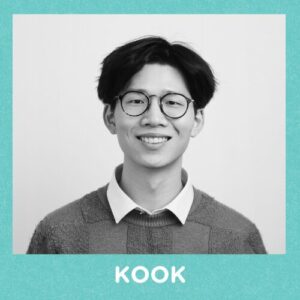
For our August spotlight, we are pleased to introduce Kook Hu, a WCC facilitator and advisory council member. Based in Montreal, Kook facilitates workshops for young writers at the Student Wellness Hub at McGill University.
Describe your journey as a WCC facilitator – how did you find WCC, and when did you become a facilitator?
KOOK: I attended my first WCC workshop at McGill during my first year in Canada. It was a time when I struggled with using English as a 24/7 language, let alone thinking of myself as a writer. That workshop—facilitated by Doug and Susie, who’ve since become dear friends—gave me a space of acceptance, safety, and light. I was moved by the culture of celebrating each other’s voices, and the idea that anyone who writes is a writer.
I became a facilitator in the summer of 2024 and have since brought WCC workshops across Canada and beyond—from McGill to Montana to Beijing. I now serve on WCC’s Advisory Council and continue to invite others into this life-changing practice.
What brings you to volunteering? And how does facilitating workshops in community settings for youth align with your objectives and aspirations as a volunteer?
KOOK: At first, I simply followed my body’s intuition—how grounded and present I felt in that first WCC session. As a mindfulness practitioner, I recognized something sacred in the structure and rhythm of WCC: a space where people meet themselves without judgment. Facilitating workshops with youth aligns with two of my core missions: promoting mindful curiosity, and empowering first-generation students and others who often feel “out of context” in systems not designed for them. Volunteering with WCC isn’t a task—it’s a practice of love, presence, and possibility.
Today is International Youth Day. Where does writing fit in the lives of youth? What do you experience in a WCC workshop, when a young person writes in community?
KOOK: Writing gives young people a space to pause and reflect in a world that constantly asks them to perform. When a young person writes in community, I see bravery, honesty, and imagination bloom. Their words often surprise even themselves—and their feedback to others is generous, wise, and refreshingly diverse. In an era shaped by AI and digital noise, writing helps us stay human by reconnecting to our inner voices.
What impact have you witnessed, through facilitating braver spaces for young writers to discover and express their authentic selves?
KOOK: I’ve seen writing become a doorway: to identity, to healing, to community. When a young writer chooses a bold word, reads their piece aloud, or listens with care, transformation happens—sometimes subtly, sometimes profoundly. Once someone realizes the value of their voice, they become unstoppable. I speak from experience: I was the first in my family to attend middle school, and it was through writing—and being heard—that I found the courage to tell my story, and later, to support others in telling theirs.
Reflect on one of WCC’s Six Essential Practices. What does it mean to you, and what is the significance of it in your workshops?
KOOK: The practice of offering only positive feedback is radical in its simplicity—and powerful in its impact. In daily life, we often notice beauty in others but hesitate to name it. At WCC, we do the opposite: we speak it, we celebrate it. This practice builds trust, invites vulnerability, and shows young writers that their work—and their presence—matters. It’s a small revolution in a world too quick to critique.
Why do YOU write? Tell us about your relationship to writing!
When I first arrived in Canada, I didn’t even believe in my own speaking—let alone my writing, especially in an academic context. English was new to me as a 24/7 language, and I felt constantly behind. But through WCC, I discovered the power of storytelling—not just as expression, but as self-recognition. Writing in community helped me find value in my own voice, and to see that our lived experiences, no matter how ordinary they may seem, hold wisdom, strength, and insight.
This realization changed the course of my life. I shifted my master’s thesis to focus on first-generation university students, even though it meant starting over and extending my graduation. I launched the First-Generation Support Network of Canada to create space for others like me to explore and claim their narratives. My research now uses autoethnography—a form of self-storytelling—to center voices often left out of academic conversations. I write not only to understand myself, but to make space for others to do the same. That journey began with WCC, and it continues every time I pick up a pen.
Thank you, Kook, for your impressive work as a facilitator and member of WCC’s Advisory Council. We’re proud to continue expanding our program delivery to young writers with your generous support and collaboration.