“In every workshop there is the opportunity to feel listened to when receiving feedback, and to practice listening deeply to others. I have experienced this sense of ‘being seen’ and connection in every workshop, and I aim to facilitate this experience for the participants.” – Kathryn Taylor, WCC Facilitator
This month, we are proud to spotlight WCC facilitators Elizabeth Frimpong and Kathryn Taylor! Bringing workshops to accessible, community spaces, we asked Elizabeth (Friends & Advocates Peel) and Kathryn (Ottawa Public Library) about the importance of gathering and connecting through art.
Describe your journey as a WCC facilitator – how did you find WCC, and when did you become a facilitator?
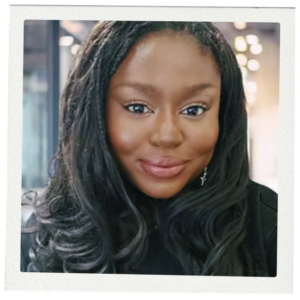
ELIZABETH: My journey with WCC began when I decided to get trained as a facilitator through my work at Friends & Advocates Peel, a community adult mental health organization based in Brampton, Ontario.
Being a creative person and lover of the arts, I always have championed healing and self-discovery through creativity and so becoming a facilitator felt like natural next step for me. It’s now been about 5 years of facilitating WCC workshops, and I love that no two workshops are the same and I’m constantly learning more about myself.
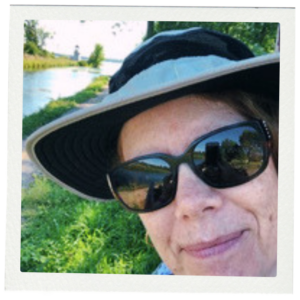
KATHRYN: I had the good fortune to serendipitously Google-stumble upon the Writers Collective of Canada website in 2024. I completed WCC facilitator training in March 2025.
I currently facilitate and co-facilitate writing workshops at the Hazeldean Branch of the Ottawa Public Library. In the winter of 2026, I co-facilitated the virtual Our Story: Writing Workshops for Military and Veteran Family Community. In 2025, I did workshops at Ottawa’s Alta Vista Library and co-facilitated virtually with the Canadian Hard of Hearing Association.
What do you experience in a WCC workshop, when you write in a community-oriented and/or peer support setting? What impact do these workshops have on the writers?
ELIZABETH: During workshops, I experience almost a sense of relief. At times it could be stress relief, or other times, letting go of something I didn’t know I was still holding onto. Something magical happens when you are able to translate emotion into poetry, stories, sentences, or short phrases. It allows for the writer to deepen their relationship with themself and the world around them. The feedback afterwards allows for a sense of community and understanding across participants, leaving people feeling seen and for some people, experiencing that feeling for the first time.
KATHRYN: Of course, at a library you are surrounded by books and may even have to navigate between bookshelves and fellow readers to find the designated community room for the writing workshop. Before a workshop even starts, you are surrounded by books, each one an expression of human imagination and purpose.
In every WCC workshop I feel myself stepping away from my ordinary life and joining an hour and a half of creativity and sharing. Psychologist Mihaly Csikszentmihalyi studied happiness and creativity and developed the concept of flow, which occurs when you are absorbed in an engaging activity and feel a sense of well-being. I experience the sense of flow during WCC workshops and believe that many participants do as well.
As facilitators, we bring the writing prompts to the workshops. It’s always profound to hear participants share their writing, because the same prompt can lead to such different and creative expressions.
Tell us about one of WCC’s Six Essential Practices and how you see it come to life in your workshops.
ELIZABETH: Referring to the pieces of others as a work of fiction regardless of whether or not they identify it to be memoir has been key to allowing participants to feel safe to say whatever their heart desires. I’ve personally witnessed participants blossom and safely find their voice without fear of judgement, as they can always rely on the separation between their personal life and what they chose to write. It’s an important part of keeping the group open to share and receive feedback.
KATHRYN: Essential Practice Number 2 is “If you read, we will only talk about what’s strong in your writing, what ‘stays with us’, or what we remember.”
I see this come to life in the workshops as participants respond authentically and supportively to fellow writers. When someone new to a WCC library workshop takes the risk of reading their writing, they’ll be given feedback based on what resonates, what stays with us, and what is vivid and strong in their writing. The aim is for everyone to feel supported by their fellow writers and facilitators.
This Essential Practice underscores that the purpose of feedback is to offer positive support and is not to offer any critique of writing style or content. This Essential Practice also highlights that it’s optional to share what you have written. This is so respectful to the writer. Most people do choose to share their writing, especially once they experience the supportive atmosphere.w you see it come to life in your workshops.
We are currently facing a global epidemic of loneliness and social isolation. With quality relationships being a major determinant of one’s health, what is the value of a partnership between WCC and community-based settings?
ELIZABETH: Here at F&A, we provide services to adults who live in isolation in order to help them get back into their communities, improve their social skills, and find a new sense of confidence within themselves. WCC does something extremely similar as it brings people together and out of their comfort zone.
It may be the first time that someone feels seen, or feels brave enough to share a part of themself that they may have hidden for so long. And then to be met with positive feedback, I’ve seen it create a new sense of self-esteem within people.
KATHRYN: During this time of much social isolation and loneliness, the partnership between the WCC and the public library offers an accessible community space for authentic connection.
One remarkable experience of WCC writing participants is the opportunity to feel listened to when receiving feedback and to practice listening deeply to others. I have experienced this sense of “being seen” and connection in every workshop, and I aim to facilitate this experience for the participants. Because every WCC library workshop has a common structure and a usual community meeting room, writers know where to meet and what to expect. This creates a foundation for quality connection with others.
Most of the WCC library workshops are drop-in and people can attend according to their schedules. There is no cost. All of these factors make it easier for people to join and to experience connection, writing and sharing.
What does it mean to gather, and build community, to you?
ELIZABETH: Gathering and building community to me means coming together as individuals with our own unique experiences and stories, and making a difference.
KATHRYN: The WCC workshops are all about gathering together and building a unique, in-community experience, one writing workshop at a time.
Why do YOU write? Tell us about your relationship to writing!
ELIZABETH: For me, writing is and always has been an emotional release and a method of exploring complex feelings. It’s a method of learning more about myself and when I write, I’m often surprised at how free I feel afterwards. Freedom of expression is extremely important to me, and it feels good when something I write aligns with the person I am and want to become.
KATHRYN: Well, I write to discover more about what I’m thinking and feeling and to put life experiences into new perspectives. I also write to have fun and feel creative.
A few years ago, while coping with the loss of a loved one, I stumbled back into writing poetry. This healing experience of writing poetry led me to complete classes on leading writing sessions and eventually to facilitate poetry groups and individual sessions. The training I took was with the National Association for Poetry Therapy and Duke University Health System’s Leading Others in Writing for Health.
When I discovered Writers Collective of Canada, I completed WCC’s in-depth facilitator training. At every WCC workshop, I find joy and meaning, and I hope you do too!
Thank you, Elizabeth and Kathryn, for your gifts of facilitation, creativity, and ongoing commitment to building community through art-making.