“When someone reaches out with a tech issue, they are not just receiving an automated reply or having their needs handled by an AI chatbot. There is a real person on the other side who is listening, responding, and helping them through it.”
– Rahma Yusuf, WCC Manager of Virtual Programs
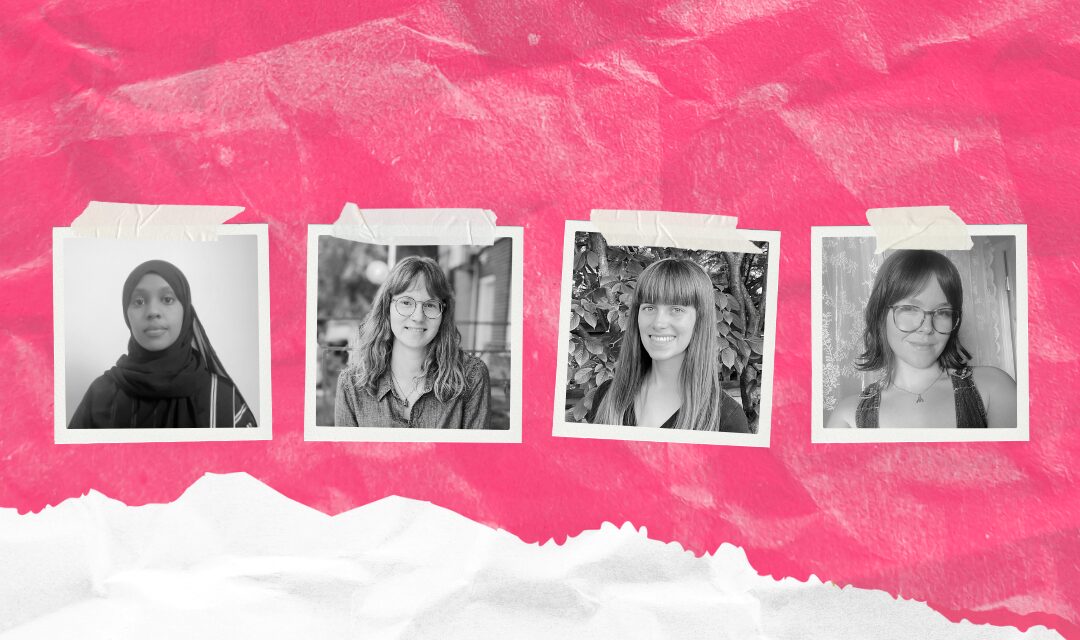
Meet the WCC Tech Support Team: Rahma, Marijke, Bronwen, and Niamh! Every virtual workshop is supported by a dedicated WCC team member who helps ensure writers and facilitators can join, connect, and participate with confidence.
For this month’s staff spotlight, we spoke with a few members of the team about WCC’s virtual workshops and the role tech support plays in bringing them to life.
In what ways does our tech support impact the workshop experience?
RAHMA: Tech support helps create a smoother and calmer workshop experience for both writers and facilitators. When the technical side is handled, participants can focus on writing, connecting, and being present instead of worrying about access issues or troubleshooting. It also allows writers to join from the comfort of their own home, or any location they choose.
BRONWEN: The tech support team is available via email and is happy to answer any questions from writers having trouble joining or participating in a workshop due to technical issues. We strive to respond quickly and effectively to answer any questions and ensure an accessible virtual workshop experience for all writers. In addition to answering tech support inquiries, we work behind the scenes to ensure that our registration pages and Zoom links run smoothly, and also help facilitate online events, including our writetogether virtual community writing workshops. Ideally, knowing that you can reach out to tech support and speak to someone about any concerns makes for a more welcoming and personal virtual workshop experience.
NIAMH: Our role, as the tech support team, is to effectively reduce as many barriers as possible so that participants may sign on and experience the magical act of sharing their stories. Though we are a small (but mighty) team, one or more of us is always available to chat with if a writer or facilitator requires assistance. This commitment to accessibility is central to every virtual workshop: if you want to join a WCC workshop, we want to do everything possible to make that happen with ease.
Accessibility is an important part of WCC’s mission. How does your work help ensure participants can engage fully in virtual programs?
RAHMA: My work helps make sure participants are able to access the workshop space with as few barriers as possible. This includes using an online platform that is free, easy to use, and accessible to everyone. We also ensure someone is online before and at the beginning of every workshop to support anyone who may have technical issues joining or navigating the workshop. Being available when technical issues come up helps participants focus on connecting, writing, and fully engaging in the experience.
BRONWEN: If a writer is having difficulty registering for a virtual workshop, cannot find the appropriate Zoom link, or is experiencing any other technical difficulties, WCC’s tech support team is easily accessible via email. We will guide writers through the process of registering and attending our virtual workshops on Zoom and will take on any additional steps that may be prohibitive to a writer’s attendance, such as manually registering them for a workshop.
NIAMH: Accessibility is essential to our organization and the delivery of all workshops. With every virtual program supported by a member of the tech support team, writers and facilitators alike can access their workshop knowing someone – a real human being! – is on the other end, ready to help if needed. To reduce as many barriers as possible is to give each workshop participant the opportunity to enjoy the experience of writing together and listening deeply.
Much of the work you do happens behind the scenes. What are some of the responsibilities or tasks writers may not realize are happening before/during/after a virtual workshop?
RAHMA: Before a workshop, there is a lot of preparation that happens behind the scenes across the tech team and other teams within WCC. My role focuses on preparing Zoom registration pages and links, posting workshops on our website calendar, supporting the creation of the weekly blast for our email subscribers, helping set up reminder emails for facilitators and writers, and making sure all details are accurate and ready for the workshop. Before and during workshops, the tech team also monitors our shared email inbox to help participants access the workshop if they are experiencing any technical issues. We also support facilitators if they face tech challenges, emergency cancellations, or last-minute changes.
BRONWEN: Before a virtual workshop, we schedule the session on Zoom and publish the registration page so writers can secure their spot up to a month in advance. If a workshop series needs to be extended or cancelled, we will update the registration pages and website calendar. We also ensure that the facilitator has access to the specific Zoom account and can admit and welcome registered writers to the workshop. Following a virtual workshop, we gather data to determine attendance statistics and evaluate our workshop capacity.
Can you share a memorable moment when you were able to help a participant, facilitator, or staff member overcome a technical challenge?
RAHMA: Tech support is really rewarding because technology can be unpredictable and anxiety-inducing. One memorable part of this work is supporting someone who feels stressed or unsure about the technology and helping them successfully access the workshop. Even something as simple as helping a participant fix their audio, find the right link, or understand how to use Zoom can make a big difference in helping them feel comfortable enough to participate.
BRONWEN: We previously had an additional verification process on our Zoom accounts, which often made it difficult for facilitators to access their virtual workshops. Once, a facilitator was having last-minute issues receiving the verification needed to access their workshop, so I called them personally and relayed the Zoom login details and instructions over the phone. It was rewarding to speak directly with the facilitator and help sort out their technical difficulties so the workshop could begin on time.
NIAMH: Over the years, still my favourite moments are when I have successfully troubleshooted a problem that has nearly impeded on a writer’s ability to join a workshop. Sometimes, it’s a missing or broken Zoom link. Other times it might be a more complicated – or just mysterious – connectivity issue, during which I have been able to share suggestions over email to walk a writer through their options. In the end, it is so fulfilling to uncover a problem, find a solution, and help someone access their workshop. Working together with our community members makes me feel proud. Because we all want the same thing, which is to just write. So, those problem-solving moments are always meaningful.
Can you share a time when you weren’t able to solve a technical issue right away? What did you learn from that experience?
RAHMA: There have been times when an issue could not be solved immediately, especially when it involved something outside of our control, such as a participant’s device, audio settings, internet connection, or an unexpected platform issue. Those moments taught me the importance of staying calm, communicating clearly, and having backup plans or workarounds so the writer still feels supported. It also reminded me that, because we are not always in control of system changes, I need to stay alert so I can be aware of them ahead of time and respond accordingly.
BRONWEN: Sometimes writers have difficulty finding the required link to join a virtual workshop in their email inbox, even when they are properly registered. In this case, the issue often stems from a writer’s email settings, and I cannot always solve the technical issue right away. However, I have learned certain workarounds to ensure registered writers can still join the workshop. I have also learned that sometimes weird and frustrating things can happen with tech that are not in our immediate control. The key is to be patient and understanding, and follow up to ensure that if a writer is unable to access a link in time, they have other opportunities to join our virtual workshops.
NIAMH: Not every tech issue has an immediate solution. Sometimes the challenge is outside of WCC’s control, like a platform glitch or a problem with a participant’s device, which means we have to think creatively about next steps. In those moments, I’ve learned that even if the issue cannot be resolved perfectly, I can still make a meaningful difference by being available and in touch, and meeting participants where they’re at with patience, compassion, and clear communication. Of course, it’s disappointing when I’m not able to get to the bottom of a confusing, disruptive tech issue. But I am glad to provide ongoing support to writers and facilitators through these difficulties, so they don’t have to navigate them on their own.
Technology is often associated with systems and troubleshooting, but your role also involves connecting with people. How do you bring a human touch to tech support?
RAHMA: One thing I really value about WCC is that there is a human touch in every response. When someone reaches out with a tech issue, they are not just receiving an automated reply or having their needs handled by an AI chatbot. There is a real person on the other side who is listening, responding, and helping them through it. I try to be as understanding and patient as possible, reassure people that we are always happy to help, and do my best to resolve the issue.
BRONWEN: I bring a human touch to tech support by prioritizing clear, empathetic communication with anyone who emails with technical issues, questions, or requests. I try to respond quickly while taking the time to read each email carefully and address any personal concerns. I also remain understanding of writers’ feelings and frustrations, especially when we have to cancel a virtual workshop at the last minute. I hope writers take comfort knowing that they are interacting with a human in an increasingly AI-driven environment.
NIAMH: I’m sure we’ve all been through the frustrating experience of trying to get help from a chatbot, or automated phone menu, when we’ve simply wanted to talk to another human being. And these chatbots/phone menus are not only ineffective at times, but they can make you feel completely unheard. I think that’s the magic of our tech support team, I mean, we’re real, and we hear you! Connecting with people is at the heart of our work at WCC, so it feels natural to reflect this in our approach to solving tech issues. Every inquiry is an opportunity to practice empathy and open-mindedness, and to reassure our community members that there’s a person on the other end who truly wants to resolve whatever issue.
What do you enjoy most about supporting WCC’s virtual programs, and what keeps you motivated in the tech support role?
RAHMA: What I enjoy most is knowing that this work helps make WCC workshops accessible to people who may not be able to attend in person. It keeps me motivated knowing that, even without being physically present, people from different locations and communities can still connect, write, and be part of the WCC experience. I also enjoy supporting the facilitators who show up every week to make these workshops happen, and knowing that my work helps their workshops run smoothly makes it worthwhile.
BRONWEN: I enjoy solving both simple and complex technical issues to help writers and facilitators access virtual workshops. Receiving positive feedback from writers and facilitators, which affirms the unique value of WCC’s virtual programs, keeps me motivated in the tech support role. I feel grateful to play a small part in a larger organization that helps empower people and build meaningful human connections.
NIAMH: Like my team members, I enjoy so much the opportunity to make our virtual programs more available and accessible to all participants. I continue to be motivated by understanding that the work we do, time and time again, directly supports moments of magnificent creativity and authentic human connection.